Cameron Darr Design
COOKED!
Location: Florence, Italy
Term: Spring 2014
COOKED! is best described as a gastronomic-urban-system-component. It infuses Florence, the cradle of the Renaissance, with something unexpected, something unique. Situated on the edge of Florence’s historic city center, the project has an intense urban fabric to contend with. Roman, medieval and Renaissance contributions have evolved together to create what is almost a single stone and marble organism. How one adds to this fabric is not an easy question to answer. In essence, COOKED! responds by making a strategic tear in that fabric, by introducing something even more primal, more inherently Tuscan, than the carbo and decumanus that anchor the old city: an olive orchard.
Hidden privacy is a re-occurring element amid the hustle and bustle of everyday action in Florence. The secrecy hidden behind a large exterior barrier is revealed through a corner opening, allowing visual penetration into a project that is both unique and contextual with the city. Frequently, Florence remains excessively attached to its rich history, sometimes inhibiting growth and movement. The use of dissimilar construction methods (steel) and form establishes a new stance to proclaim this city as Italy's entrance into a modern era. COOKED! is where historical dominance and contemporary dynamism coalesce into a truly surprising, yet respectful center for tuscan gastronomy.
In collaboration with: Nicholas Batie, Caleb Couch


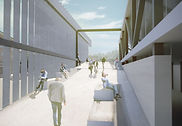
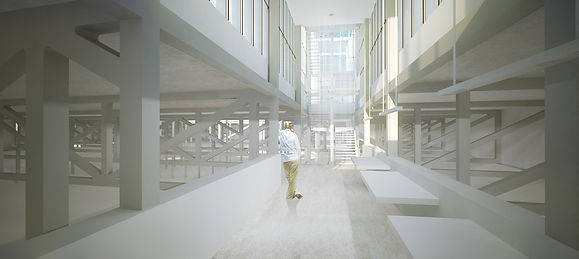


Tuscan gastronomy beauty lies in the simplicity of its ingredients. Like its predetermined program, COOKED! has only a handful of clearly delineated yet effectively used programatic elements. The center is divided into three ingredients: research, civic, and residential.
Inside the research facility exists many different methods to develop new flavors from traditional ingredients. New meals are created with products grown on site in the orchard, and via the hydroponics in the facility.
The civic structure is at the corner of the site, embracing the city as a pinnacle of entrance and dialogue with the new train station, a secondary portal to Florence. It houses a transitional farmer's market, and museum / gallery space dedicated to tuscan cuisine.
The residential tower is the bold element that delicately incites the urban fabric. It is a triad of inhabitation, where temporary guests, semi-permanent researchers, and long-term residents can live, work, and converse: a truly original and unique form of living in Florence.
Research
Orchard
Residential
© 2015 by Cameron Darr Design. Created with Wix.com